Featured
Table of Contents
If you have inquiries or want more information about AMP, please visit our Help Center. Photo Are registered in the California Alternative Prices for Power (CARE) or Family Members Electric Price Assistance (FERA) program. Have actually been an SCE client for at least 6 months. Have a past-due costs totaling up to greater than $500 (several of which have been overdue for greater than 90 days). Have made at the very least one on-time repayment in the previous 24 months.
Customers who enroll in the AMP program are not eligible for time payment plan. Internet Power Metering (NEM), Direct Gain Access To (DA), and master metered clients are not currently qualified. For clients intending on relocating within the next 60 days, please use to AMP after you have actually established service at your brand-new move-in address.
The catch is that nonprofit Charge card Debt Forgiveness isn't for everybody. To certify, you should not have made a payment on your debt card account, or accounts, for 120-180 days. Additionally, not all creditors participate, and it's just used by a few nonprofit credit scores counseling firms. InCharge Financial debt Solutions is just one of them.
"The other emphasize was the perspective of the counselor that we might get this done. I was seeming like it wasn't going to take place, but she maintained with me, and we got it done." The Charge Card Mercy Program is for people who are so much behind on bank card repayments that they are in significant monetary problem, possibly facing personal bankruptcy, and don't have the earnings to capture up."The program is especially designed to assist clients whose accounts have actually been billed off," Mostafa Imakhchachen, customer treatment specialist at InCharge Financial debt Solutions, said.
The Basic Principles Of Ways Debt Relief Preserves Your Assets
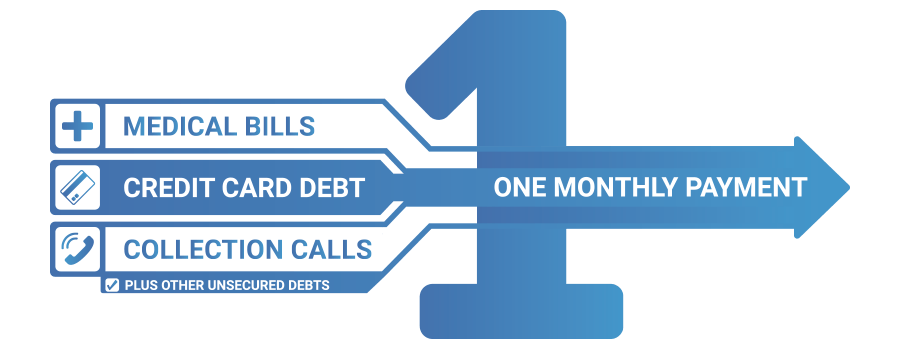
Financial institutions who take part have actually agreed with the nonprofit credit scores therapy firm to accept 50%-60% of what is owed in fixed regular monthly settlements over 36 months. The set settlements suggest you understand specifically just how much you'll pay over the payment duration. No passion is billed on the balances throughout the payoff period, so the repayments and amount owed do not change.
It does reveal you're taking an energetic role in reducing your financial debt. Considering that your account was already means behind and billed off, your credit report score was currently taking a hit. After negotiation, the account will be reported as paid with an absolutely no equilibrium, instead of outstanding with a collections business.
The agency will draw a credit record to comprehend what you owe and the extent of your challenge. If the mercy program is the finest remedy, the counselor will certainly send you an agreement that information the strategy, including the amount of the monthly payment.
Once everybody agrees, you begin making regular monthly settlements on a 36-month plan. When it mores than, the agreed-to quantity is removed. There's no penalty for repaying the balance early, yet no expansions are enabled. If you miss a repayment, the agreement is squashed, and you need to exit the program. If you believe it's a good alternative for you, call a counselor at a nonprofit debt therapy agency like InCharge Financial obligation Solutions, that can address your concerns and help you establish if you qualify.
A Biased View of Immediate Consequences on Personal Credit History
Due to the fact that the program allows customers to choose less than what they owe, the creditors that participate desire confidence that those that capitalize on it would not be able to pay the sum total. Your bank card accounts likewise should be from banks and bank card companies that have consented to participate.
If you miss a settlement that's simply one missed repayment the arrangement is terminated. Your creditor(s) will cancel the plan and your equilibrium goes back to the original quantity, minus what you've paid while in the program.
With the forgiveness program, the financial institution can instead choose to keep your financial obligation on the books and redeem 50%-60% of what they are owed. Nonprofit Charge Card Financial obligation Mercy and for-profit debt settlement are similar because they both give a method to work out bank card debt by paying much less than what is owed.
Examine This Report about Maintaining a Stable Financial Plan That Protects You

Credit rating card mercy is made to cost the consumer less, repay the financial debt quicker, and have less drawbacks than its for-profit equivalent. Some crucial areas of distinction in between Credit score Card Financial debt Mercy and for-profit financial debt negotiation are: Bank card Debt Forgiveness programs have partnerships with creditors that have actually agreed to take part.
Once they do, the reward period begins immediately. For-profit financial obligation negotiation programs work out with each creditor, typically over a 2-3-year period, while interest, charges and calls from financial obligation collectors continue. This implies a bigger hit on your credit history report and credit rating, and an increasing equilibrium till negotiation is finished.

Charge Card Financial obligation Forgiveness customers make 36 equivalent monthly repayments to eliminate their debt. The payments go to the financial institutions up until the agreed-to balance is gotten rid of. No interest is charged during that period. For-profit financial obligation settlement customers pay into an escrow account over an arrangement period toward a round figure that will certainly be paid to financial institutions.

Table of Contents
Latest Posts
Developing a Sustainable Spending Strategy for Long-Term Security Can Be Fun For Everyone
More About The Pros to Consider of Debt Forgiveness
What Does How to Never Fall Into Future Debt Cycles After Debt Relief Do?
More
Latest Posts
Developing a Sustainable Spending Strategy for Long-Term Security Can Be Fun For Everyone
More About The Pros to Consider of Debt Forgiveness
What Does How to Never Fall Into Future Debt Cycles After Debt Relief Do?